
Canada faces EU carbon tariff on key metals despite domestic pricing
Internal documents show Canadian iron, steel, and aluminum exports will incur border charges starting in 2027, with Atlantic provinces bearing the highest financial risk.
By Valentina Rojas ·
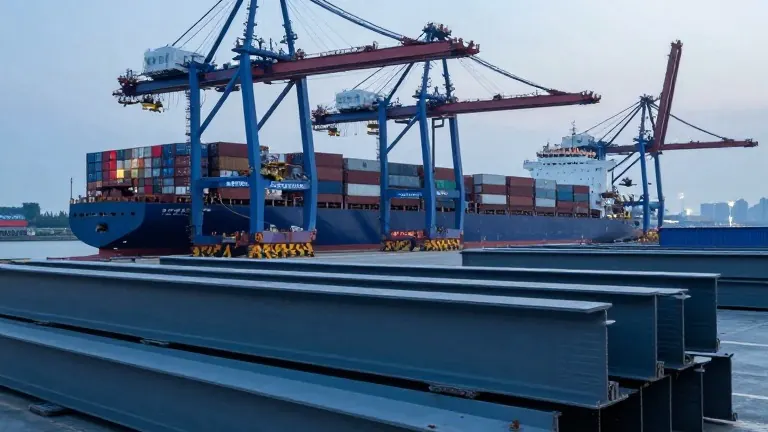
Canadian iron, steel, and aluminum shipments to the European Union will face new carbon charges beginning in 2027, despite Ottawa’s existing national carbon pricing system. Internal documents from Global Affairs Canada confirm that the country will not receive an exemption from the EU’s Carbon Border Adjustment Mechanism, a policy designed to equalize the cost of carbon emissions across trading partners.
A memo signed on December 10, 2025, describes the mechanism as a "border charge" or "effectively a 'carbon tariff.'" The government estimates that $2.8 billion worth of annual Canadian goods are exposed to this levy. These goods are primarily metals that are already affected by tariffs from the United States, creating a dual pressure on exporters.
The lack of an exemption stems from a structural gap between the two pricing systems. The EU exempts countries like Switzerland, Norway, Iceland, and the United Kingdom because their carbon pricing is linked to the EU Emissions Trading System. Canada’s system is not linked. In 2025, the EU carbon price stands at approximately $134 per tonne, compared to $95 per tonne in Canada.
Exposure varies by region, with the Atlantic provinces facing the steepest costs. The internal note indicates that an annual average of $885 million in Newfoundland and Labrador’s iron and steel exports is exposed to the tariff. This figure represents nearly half of the province’s total exports in those sectors. In Quebec, the value of exposed aluminum, iron, and steel exports is approximately $792 million annually.
These figures are based on data from 2021 to 2024. Officials note that exposure could increase as Canadian manufacturers seek new buyers to offset lost markets in the U.S. The internal briefing flags risks associated with implementing the tariff while Canada attempts to diversify trade away from its largest partner.
Prime Minister Mark Carney stated on Tuesday that the Canada-EU Summit in Montreal marks the start of negotiations for a closer strategic partnership. Environment and Climate Change Minister Julie Dabrusin is attending the summit. Her office said Canada is advocating for recognition of its industrial carbon pricing systems to reduce administrative burdens.
Experts warn that the new regime will raise compliance costs. Ross-Linden Fraser, acting director at the Canadian Climate Institute, called it a "big change in the way that trade gets treated." Aaron Cosbey, an economist at the International Institute for Sustainable Development, noted that exporters must already measure embedded emissions and have them verified by accredited third parties.
By 2034, when the mechanism ramps up to full implementation, Cosbey estimates the cost could add $150 per tonne to Canadian steel. This amount represents more than 10 percent of the market price for a tonne of steel. The EU is currently applying the charge at a low level, but the financial impact will grow as the policy matures.
Canada Nickel, which is developing a project in Timmins, Ontario, believes it is well positioned for the new rules. The company plans to use low-carbon electricity and carbon capture technology to produce what it calls potentially zero-carbon steel. CEO Mark Selby said the final costs, including compliance, would be minimal compared to other global exporters.
Selby stated that the company aims to ship millions of tonnes of steel to Europe annually, with the carbon charge translating to "pennies per tonne over the long run." However, the broader industry faces a growing threat as other nations, including the U.K., Australia, Japan, and Turkey, develop similar border adjustment mechanisms.
European Union officials said both sides are committed to climate change goals and are working to align baselines and processes. It remains unclear how the EU will formally recognize Canada’s carbon price in future calculations. The internal note states that countries with a carbon price will receive credit, but the specific method for calculating that credit is not defined.
Source: CBC News
More Business · Bad Service · Report a business · Got a Story?