Judge Brinkema Halts Trump Arch Project Over Legal and Environmental Fears
A federal judge in Virginia issued an indefinite injunction against the 250-foot monument, marking the second judicial victory for opponents this week.
By Nicholas Campbell ·
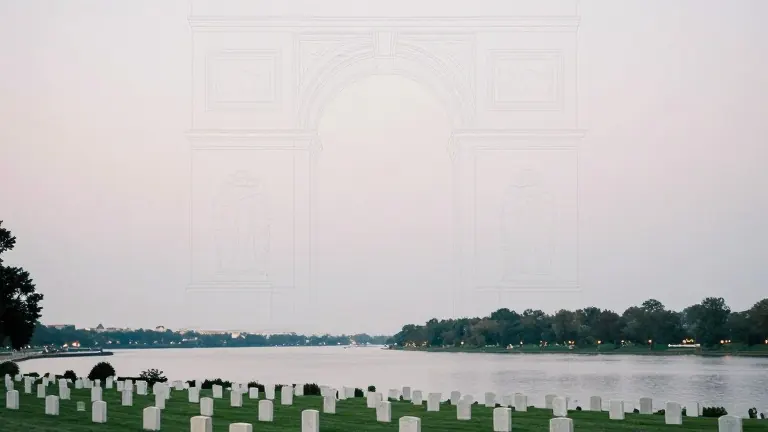
A federal judge in Virginia has issued a preliminary injunction that indefinitely blocks the construction of President Donald Trump's proposed 250-foot triumphal arch. District Judge Leonie Brinkema granted the request from the Arlington County Board, which filed suit in October to stop the project. The decision prevents the administration from breaking ground while the legal challenge proceeds.
The monument is slated for Memorial Circle, a location that sits in the District of Columbia but physically rests on the Virginia side of the Potomac River. The site is near Arlington National Cemetery and Ronald Reagan Washington National Airport. Arlington County argued that the structure would cause substantial harm to local residents through increased noise, air pollution, and traffic congestion. The county also noted that an arch doubling as a military complex would create public safety risks and require additional county resources.
Kate Talmor, senior counsel for the nonprofit Democracy Forward, said the court recognized the irreparable harm the project would bring to people living and working in Arlington. Talmor stated that the ruling stops the massive vanity project while the case is heard. The Justice Department said it will appeal the decision immediately.
Arlington County highlighted logistical challenges, noting that the arch would disrupt historic sightlines between the cemetery and the National Mall. The county also pointed to the roughly 24 to 27 funerals held at the cemetery every weekday. Local emergency units responded to approximately 200 incidents in the area surrounding the Circle in the last 60 days, including traffic stops and medical assists. The plaintiffs argued that the arch would increase demand for those same services.
Brinkema, a Clinton appointee, suggested during the Friday hearing that Arlington is likely to prevail on the merits. She stated she did not see any way the government could win the case. She reiterated that the project lacks congressional approval, which the Trump administration has not sought. The administration argues the arch is covered by a 1925 law authorizing shorter columns at that location, a claim Brinkema and another judge have frowned upon.
On Wednesday, D.C. District Judge Tanya Chutkan extended a restraining order that prevents the administration from starting construction through December 3. Chutkan is considering the underlying legal arguments in a case brought by a group including Vietnam War veterans. The governments of D.C. and Virginia joined that suit last month, and nine Kennedy family members moved to participate last week.
Brinkema described the government's work as a rushed job. She found the analysis of the structure's environmental and economic impact inadequate, particularly regarding construction cranes that would be taller than the arch itself. The Federal Aviation Administration said the arch would not pose a hazard to aircraft if lit correctly, including with an eternal flame on top. Aviation safety experts remain concerned that the structure would add risk to the already complicated airspace, especially if military capabilities are added.
Davis Ingle, a White House spokesperson, said the administration will continue making the case for the monument. Ingle expressed confidence that the administration will be fully vindicated as the litigation proceeds. The National Park Service defended the federal review process, which ended in approval earlier this month, and stated that building the arch elsewhere would defeat its purpose.