Maunalua Bay volunteers remove 4 million pounds of invasive algae
Alex Awo leads a nonprofit effort to restore the Oahu estuary by converting invasive growth into compost and training local students.
By Samuel Peterson ·
Alex Awo describes the southeast shore of Oahu as a toxic wasteland in his childhood, a place overrun by pollution and invasive species. He now directs habitat restoration programs for the nonprofit Mālama Maunalua, aiming to reverse that decline and restore the estuary to full health.
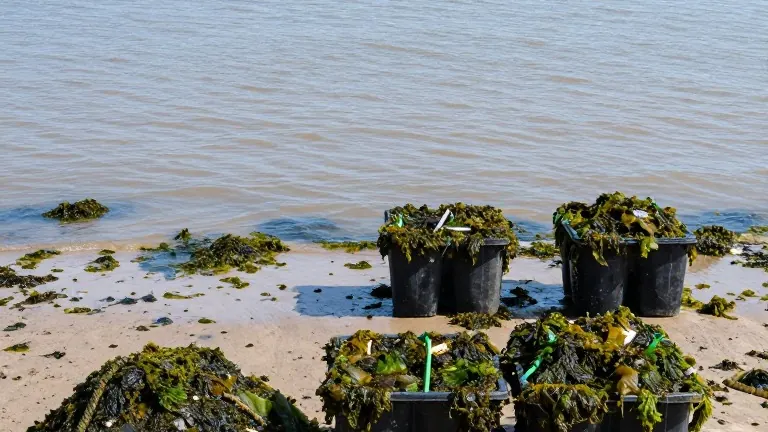
The organization relies on a volunteer corps that ranges in age from kindergarteners to senior citizens. These participants join the huki program to pull invasive algae from the water. Since the program began, volunteers have removed more than 4 million pounds of the invasive growth. The group converts the harvested algae into compost, which is then donated to local farms, schools, and nursing homes.
Awo notes that the process transforms a harmful element into a positive resource. He states, “We’re able to take something … causing a lot of harm and turn it into something really positive.” This community-driven approach allows the nonprofit to manage large-scale removal efforts without relying solely on paid labor.
The staff also runs an internship program for high school and college students. Interns receive hands-on training in marine science, surveying, and water quality analysis. They assist with planting thermally tolerant corals that resist bleaching. The group also works to mitigate stormwater runoff, which carries chemicals and sediment into the bay.
Mālama Maunalua employs a mauka to makai strategy, recognizing that land-based actions directly affect the ocean. The organization educates residents on these connections to address environmental problems at their source. Despite ongoing progress, the bay faces pressures from overfishing, unsustainable development, and rising sea levels.
Funding for these operations comes from government grants and private donors. The nonprofit partners with businesses such as Hawaiian Airlines, First Hawaiian Bank, Bank of Hawai‘i, Duke’s Waikiki, and Maui Brewing Co. These partners support the work through team bonding events and corporate giving.
Awo plans to expand the organization’s reach and student programming over the next decade. He intends to continue improving the local environment while broadening the impact of conservation efforts across Hawaii.