Nairobi mobilizes 4,000 workers for flood prep
The county government deploys a youth workforce to clear drains and remove unpermitted structures ahead of a record-breaking El Niño event.
By Nicholas Campbell ·
Nairobi has mobilized more than 4,000 workers to prepare for the strongest El Niño event on record.
The city’s county government activated the Green Army, a youth-employment program, for full-scale drainage and debris clearance. Forecasters predict the weather pattern will peak in November or December and persist into early 2027. Workers in reflective vests are currently shoveling dirt from riverbanks near the city center on unseasonably hot days.
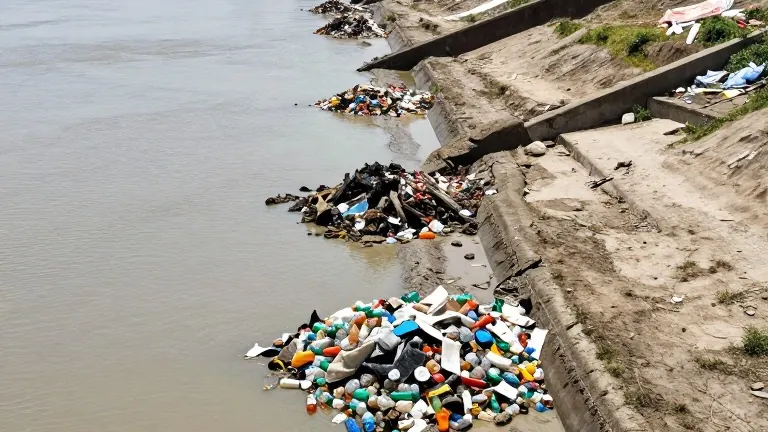
Alex Oyando, a 30-year-old worker, explained that removing sediment allows water to flow freely. He noted that clogged troughs often trap debris, which increases the risk of flooding during heavy rains. The Green Army typically handles trash pickups and greening projects, but current duties include widening ditches and dismantling illegal structures. Earlier this month, Oyando and his team widened a drainage ditch along a busy road. That area frequently accumulates fabric, plastic bottles, and litter, which can trigger flash floods.
Nairobi faces severe flood risks due to aging infrastructure designed for a smaller population. Bramwell Simiyu, the chief officer of disaster management for the county, stated that the current system was built for a population of no more than 2 million people. The city now supports a daytime population of close to 7 million. Last March, rain-induced flash floods killed more than 100 people, prompting residents to demand better preventative measures from the government.
The federal government has allocated a $385 million plan to address these issues. The funding aims to widen waterways, build affordable housing, and improve trash pickup and sewer systems by the end of 2027. This program also supports Climate WorX, a national youth employment initiative working alongside the Green Army. Simiyu said the county is currently stocking supplies and setting up evacuation centers. He added that planners are preparing for a worst-case scenario that could affect up to 20,000 households, primarily in low-income settlements.
The removal of unpermitted structures has sparked controversy in those neighborhoods. Tobias Sifuna, a Green Army supervisor in the Kamukunji area, described the demolitions as necessary because the kiosks were built without county authorization. However, local vendors rely on these stalls for income and daily shopping. Wycliffe Ochieng, a 32-year-old fruit vendor, said many workers in central Nairobi can no longer afford hot lunches during the day. He noted that he sometimes sleeps without food because prices have risen.
Ochieng experienced the impact of last season’s floods firsthand. He lost his grocery stand and had to sleep outdoors because he could not reach his home through the floodwaters. He described the area as an ocean during rain, noting that all food stalls were swept away. A friend who owned a food stall died while trying to escape. Ochieng struggled to rebuild his business in a new neighborhood where customers did not yet know him. He expressed fear that if the new El Niño event arrives, he may not be able to recover his livelihood again.
The county government continues to clear drainages and prepare for the rainy season. Workers will maintain their schedules to remove obstacles from waterways. The $385 million infrastructure plan is scheduled for completion by the end of 2027. Evacuation centers remain open for use as weather conditions develop. The Green Army teams will continue to operate in low-income areas where flood risks are highest.
Source: WUSF Public Media · original report published
More News · Clearwater news · Report a business · Got a Story?