O'Hare suspect faces five years after filming planes from FedEx lot
Federal prosecutors say Weiheng Zeng worked with a Chinese contact to gather intelligence on U.S. logistics networks.
By Valentina Rojas ·
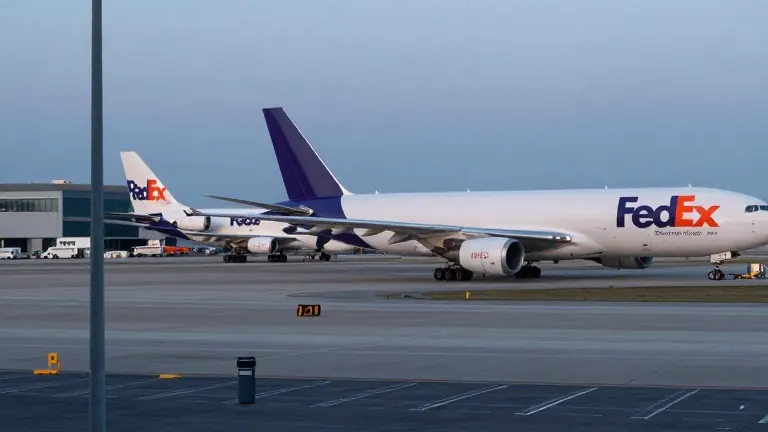
Weiheng Zeng could spend five years in prison if convicted. The Chinese national, who lives in Canada, was arrested in August after federal authorities said he took photographs of aircraft and facilities from a private FedEx parking lot at O'Hare International Airport. The case has drawn attention to ongoing Chinese intelligence-gathering efforts in the Chicago area.
Zeng was first stopped by Customs and Border Protection and the FBI. During questioning, his account changed, leading to a charge of making false statements. He later admitted to FBI investigators that he worked with an unnamed Chinese contact online. That contact directed him to photograph specific aircraft and obtain interior views of the FedEx facility in exchange for money.
Investigators say Zeng knew the contact worked for Chinese security forces. The group was interested in information about U.S. transportation and logistics, including flight freight details, bus routes, and train schedules. They described their goal as research. John Cohen, a former Department of Homeland Security intelligence chief, said the case shows clear signs of a professional intelligence operation.
"It's very clear that this was a counter intelligence related investigation and that he was exhibiting the tradecraft used by intelligence operatives as they seek to gather sensitive information," Cohen said.
Cohen noted that Illinois is a frequent target because of its concentration of universities, research institutions, and technology companies. The state's advanced research capabilities make it a priority for foreign intelligence groups. These operations aim to acquire corporate trade secrets and government data to advance their own technical development.
"All in an effort to acquire corporate trade secrets that they can then use to advance their own technical development efforts or government secrets," Cohen said. The Chicago area has seen several similar cases. In 2012, Hanjuan Jin was sentenced for stealing trade secrets from Motorola in Schaumburg. In 2023, Chaoqun Ji, a graduate student at Illinois Institute of Technology, was sentenced for attempting to recruit engineers and scientists for a Chinese intelligence operation.
Cohen explained that intelligence operatives often recruit individuals who can be easily directed. The person taking the pictures does not need to be sophisticated, but the person controlling that source usually is. "The key for an intelligence operative is to recruit people that can be influenced, that can be directed," Cohen said. He added that the threat from foreign intelligence operations continues to grow and has not diminished.
Cooperation between state and federal agencies was key to the Zeng investigation. Zeng's attorney declined to comment. If convicted, he faces a maximum sentence of five years in prison.