Shenzhen Summit Puts China at the Center of Nuclear and Economic Debates
Xi Jinping seeks to project global leadership while managing domestic economic strain ahead of the Communist Party Congress.
By Samuel Peterson ·
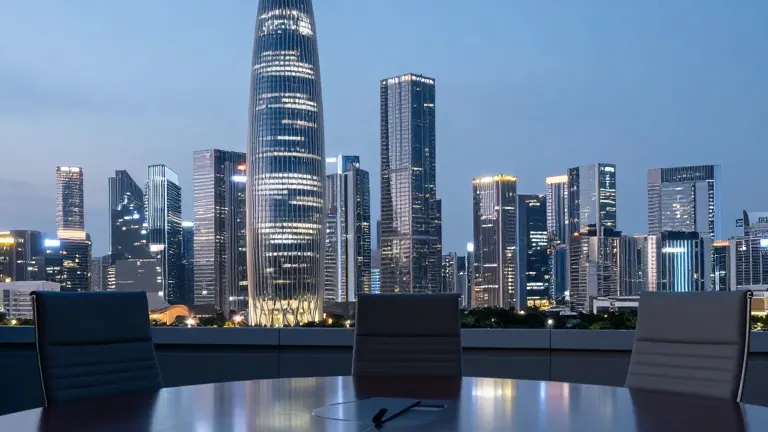
Xi Jinping has gathered Vladimir Putin and Donald Trump in Shenzhen for a summit designed to showcase China's rising influence on the global stage. The meeting, framed as an economic gathering for Asia Pacific leaders, places Beijing at the center of conversations that have traditionally been dominated by Washington, London, and Brussels. As the three leaders convene, the city’s futuristic backdrop of driverless cars, overhead drones, and street-dancing robots underscores the message of technological and political advancement.
The summit arrives at a delicate moment for Xi. China is navigating a complex balance regarding the war in Ukraine, which has entered its fourth year. Beijing prefers to keep the conflict off the formal agenda to protect its trading relationship with the European Union, a vital market for Chinese exports. However, Xi must also maintain his alliance with Moscow without allowing Russian instability to spill over into Chinese territory. The United States and European allies have accused China of supplying war components to Russia and propping up its economy through energy purchases, a dynamic Xi seeks to manage carefully.
Nuclear policy presents a second major point of tension. President Trump has pushed for a discussion on limiting global nuclear stockpiles. The last major arms control treaty, New START, between the US and Russia expired in February 2026. While the US and Russia hold the largest arsenals, China is rapidly expanding its own capabilities. Trump wants to include Beijing in any new agreement, but Xi argues that China’s arsenal is considerably smaller than those of Washington and Moscow. Consequently, Beijing believes it should retain the freedom to develop its nuclear forces without being bound by limits set for the other two powers.
Controlling the narrative remains a priority for the Chinese leader. Chinese officials typically choreograph such events with strict agendas and prepared speeches. However, both Trump and Putin are known for their unpredictability. Trump has already suggested he may go off script, posing a risk that the two guests could dominate the proceedings. This dynamic could shift the focus from Xi as the architect of the summit to his role as a mere host, though some analysts suggest that unscripted moments might reinforce his image as a stable senior statesman compared to the two leaders embroiled in ongoing wars.
Domestic pressures loom large as Xi heads toward next year’s Communist Party Congress, where he is expected to secure a fourth term. China is grappling with a nationwide property crisis, heavily indebted local governments, and a slowing manufacturing sector. One in five young people struggle to find employment, leading to widespread frustration. The summit offers a platform for Xi to demonstrate that China is no longer a rising power but one that shapes the rules of the new era, aiming to bolster his standing with the party elite amid these economic headwinds.
The meeting is expected to conclude with a display of unity rather than a formal treaty. For Xi, the symbolic weight of hosting the US and Russian leaders in Shenzhen serves as proof that the era of Western-led international order is shifting. The summit provides a visual and political argument that Beijing is now a central player in defining the future of global politics and economics.