Baltimore Approves Harborplace Deal
City leaders finalize a 25-year agreement with MCB Real Estate, pending a December board vote.
By Samuel Peterson ·
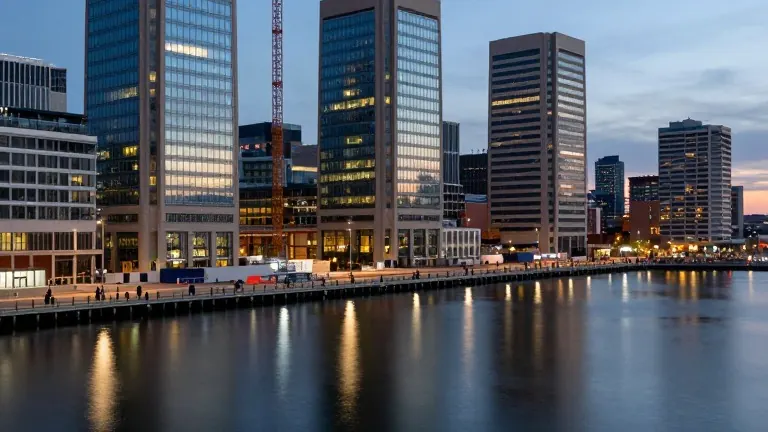
Baltimore Mayor Brandon Scott announced on Thursday that the city has finalized terms for the redevelopment of Harborplace. The agreement involves MCB Real Estate and is scheduled for a vote at the Board of Estimates on December 2. This move aims to replace the aging pavilions in the Inner Harbor with a new mixed-use development.
The city projects that the construction phase will generate $2 billion in economic activity. Of that total, $26.4 million is expected to flow directly to Baltimore City. The new development is designed to produce more than three times the tax revenue currently generated by the existing structures. The deal consists of four main components: a ground lease, a payment in lieu of taxes, a community benefits agreement, and a profit sharing agreement.
Officials argue the project is necessary to stop a steady decline in property value. The city estimates that the current pavilions lose $10 million in assessed value every year. Without intervention, these properties would yield only $23,000 in annual property taxes. Over the period through 2054, that amount totals just $4.03 million. The new agreement guarantees a minimum of $543,000 in annual property taxes for the city.
These tax revenues will enter the general fund and support local projects such as libraries, housing, and schools. Over the 25-year term of the agreement, the deal is projected to generate $35.36 million in tax revenue. MCB has also pledged $10 million to a community fund dedicated to benefiting downtown Baltimore. The agreement requires that 10% of new units be set aside for affordable housing. It also mandates the creation of 4.5 additional acres of parks and public spaces.
Mayor Scott stated that his primary goal during negotiations was to secure favorable terms for residents. He noted that past deals often favored private developers at the city's expense. Scott expressed confidence that this agreement serves the interests of Baltimoreans and will help create a shared public space. He described the new Inner Harbor as a project the community can be proud of.
The project faces a legal challenge from a group of local and business owners. They have filed a lawsuit seeking to block demolition efforts and stop the redevelopment from moving forward. The plaintiffs claim that city officials violated the Baltimore City Charter and zoning laws during the approval process. One plaintiff, David Tufaro, is also pursuing historical status for the pavilions.
Tufaro, the founder of Terra Nova Ventures, submitted an application to the Maryland Historical Trust. He argued that the site, which opened in 1980, helped revitalize the waterfront and served as a model for other cities. Tufaro noted that the location attracted more than 20 million visitors annually in its early years. He believes the structures need updating rather than demolition due to their historical significance.