The Four-Day Clock: USDA sets new deadline for Thanksgiving leftovers
Experts advise consuming refrigerated turkey and side dishes by Monday, Nov. 30, or freezing them to prevent spoilage.
By Nicholas Campbell ·
Four days is the maximum window to safely eat most Thanksgiving leftovers after they are placed in the refrigerator.
The U.S. Department of Agriculture states that cooked turkey, stuffing, mashed potatoes, and other holiday dishes remain safe for consumption for three to four days when stored at 40 degrees Fahrenheit or below. Since Thanksgiving falls on Thursday, Nov. 26, households should plan to finish these meals by Monday, Nov. 30. If the food has not been eaten by that point, it should either be discarded or frozen.
This timeframe applies to the core components of the meal. The USDA lists turkey, stuffing, dressing, mashed potatoes, green bean casserole, mac and cheese, cooked vegetables, and gravy as items with this same three-to-four day shelf life. The agency emphasizes that the clock begins ticking as soon as the food is served. Perishable items must go into the refrigerator within two hours of cooking or removal from the fridge. If the food sits out for more than two hours, it should be thrown away. In hotter conditions, such as an outdoor gathering where the temperature exceeds 90 degrees, that safety window shrinks to just one hour.
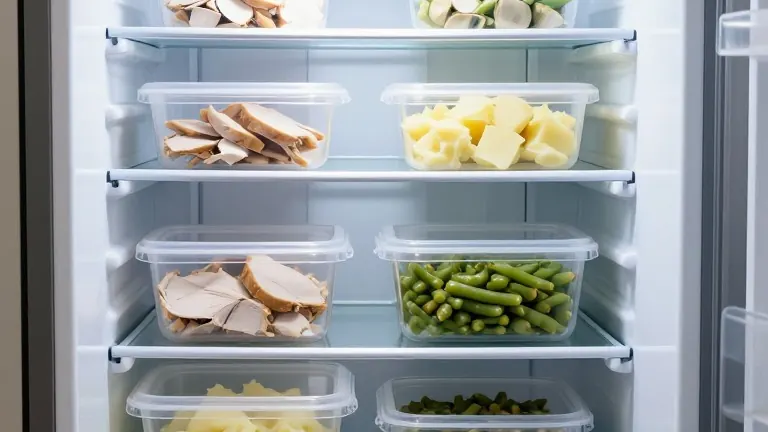
Proper storage methods influence how quickly the food cools. The USDA advises against waiting for large trays to cool completely at room temperature. Instead, cooks should divide large portions into smaller, shallow containers. Turkey should be removed from the bones and stored in smaller pieces to facilitate faster cooling. Stuffing that was cooked inside the bird should be stored separately from the meat.
Freezing offers a longer alternative for leftovers that cannot be eaten within the four-day window. Food kept continuously at 0 degrees Fahrenheit or below remains safe indefinitely, though its texture and flavor may degrade over time. To maintain the best quality, the USDA recommends eating frozen leftovers within two to six months. Items should be stored in airtight containers or freezer bags with as much air removed as possible.
Reheating requires specific attention to temperature. Leftovers must reach an internal temperature of 165 degrees Fahrenheit before being eaten. A food thermometer is the recommended tool for this check, as visual or tactile cues are unreliable. Microwave users should cover dishes and stir or rotate the food partway through the heating process to eliminate cold spots. Liquid items like gravy, soups, and sauces should be brought to a boil when reheated.
Food safety experts caution that bacteria capable of causing illness do not always alter the smell, taste, or appearance of the food. If there is uncertainty about how long an item has been sitting out or stored in the fridge, the safest course of action is to discard it. This guidance from the USDA and CDC aims to reduce the risk of foodborne illness during the days following the holiday.