China-Iran Ties: Israeli Officials Claim Military Support
Former Israeli security leaders told a conference in Tel Aviv that Beijing helped Iran rebuild missile capabilities, a claim the Chinese ambassador called baseless.
By Samuel Peterson ·
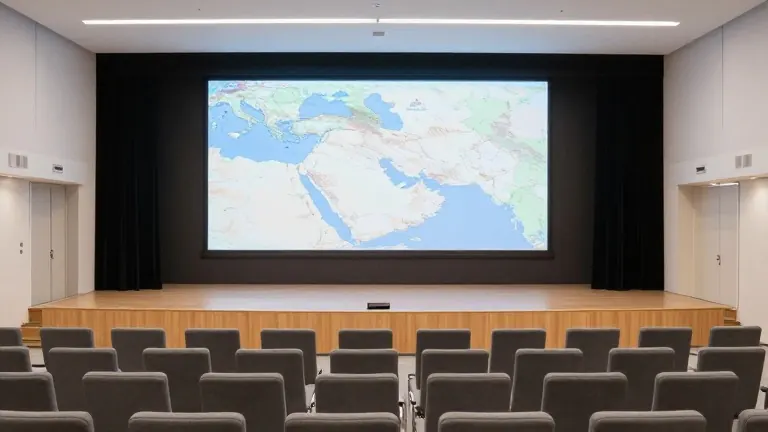
Tensions over Beijing's role in the Middle East flared on Thursday in Tel Aviv.
Former Israeli security officials alleged that China is providing Iran with military technology.
The claims emerged during a policy conference at the Tel Aviv Stock Exchange.
Chinese Ambassador to Israel Xiao Junzheng responded to the accusations.
He dismissed the reports as baseless arguments.
He noted that similar claims were raised at the same conference last year.
Maj.-Gen. (res.) Yaakov Amidror presented the primary allegations.
He served as national security adviser to Prime Minister Benjamin Netanyahu.
Amidror said Israel successfully struck Iranian missile production infrastructure.
He claimed Tehran then purchased Chinese capabilities to reproduce those missiles.
He stated that Iran could not resume production without Chinese help.
He acknowledged uncertainty about whether the aid came from civilian or military sectors in China. Xiao Junzheng defended China's export control policies in response. He said China maintains normal relations with Iran under international law. He cited Chinese law regarding the sale of weapons to parties in armed conflict. He added that China strictly regulates exports of dual-use items. He suggested the Israeli government would inform Beijing if definitive evidence of lethal weapon transfers existed. The dispute follows recent international reporting on Iran's procurement of goods. A September Reuters report cited five sources on a barter arrangement involving oil revenues. The report alleged Iran used this method to buy billions of dollars worth of Chinese goods. Sources indicated the arrangement supported multimillion-dollar air-defense contracts. China's Foreign Ministry said it was not familiar with the arrangement at the time. A subsequent Reuters investigation detailed a network of Iranian agencies. The report found these agencies imported at least $2 billion in military-related goods since January 2025. The imported items included rocket-fuel ingredients and industrial machinery. Heavy-duty vehicles suitable for missile and drone production were also listed. China, Russia, and Germany were named as origin countries for these goods. Experts consulted by Reuters noted that some materials had civilian uses. The investigation did not establish whether Beijing directly authorized the transfers. Former Mossad director Efraim Halevy also spoke at the conference. He recounted a 1993 visit by former Prime Minister Yitzhak Rabin to Beijing. Halevy said the visit aimed to stop Chinese scientific support for Iran's nuclear program. He claimed Rabin presented detailed intelligence to Chinese President Jiang Zemin. Halevy stated that Jiang Zemin flatly denied the support. He added that China took steps to halt nuclear assistance after talks with the US. Halevy asserted that a building in Isfahan contains equipment for uranium processing. He claimed a plaque on the building thanks China for its contribution. The plaque is written in Farsi and Chinese according to Halevy. The Jerusalem Post could not independently verify the claim about the plaque.