Yemen pre-pays import duties in Houthi zones
New rules require businesses to settle customs costs upfront before foreign exchange transactions can be processed for goods entering northern ports.
By Samuel Peterson ·
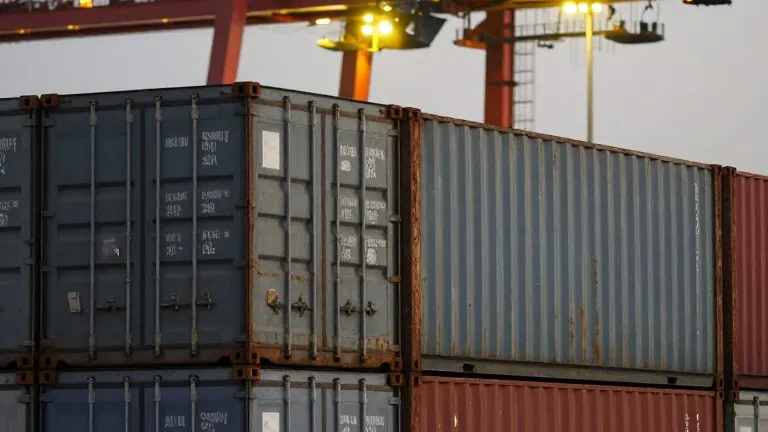
Importers shipping goods to ports controlled by the Houthis in Yemen must now pay all customs duties and taxes before banks process international transfers. The National Committee for Regulating and Financing Imports (NCRFI) issued the directive, which was shared by the Aden Chamber of Commerce and Industry this week. The change links the release of foreign currency directly to proof of payment for government levies.
The Aden-based government aims to tighten its financial grip on trade flows that historically passed through the north without full revenue collection. Under the new mechanism, the Central Bank of Yemen in Aden acts as the sole authorized entity for covering letters of credit. Commercial banks cannot access international correspondent banks for these transactions unless the importer has settled all applicable charges in full.
Wafiq Saleh, an economic journalist in Yemen, explained that traders who try to bypass this system will face difficulty securing the necessary banking instruments. He stated that no commercial or banking entity can access the global financial system outside of the official monetary authorities. Saleh described the move as a key economic tool for the central bank to manage imports and counteract informal trade channels.
Critics argue the prepayment requirement adds a financial burden to businesses operating in a country with widespread poverty. Saleh noted that the limited volume of imports currently reaching the besieged city of Taiz does not meet the basic needs of residents. He warned that the economy is drifting toward a war-driven model characterized by inflated black-market prices for essential goods.
The Houthis have collected revenue through taxes, customs duties, and religious alms since capturing Sanaa in 2014. The Mokha Center for Strategic Studies estimated in a July report that this parallel economy generates approximately $2.5 billion annually in direct and indirect financial resources. The breakdown includes $800 million from taxes and customs, $600 million from additional fees, $300 million in cash and in-kind contributions, and $100 million from mobilization events.
The research institution also calculated that businesses absorb an extra $700 million in indirect costs due to this structure. On Thursday, The Wall Street Journal reported that the Houthis demanded $51 billion from Saudi Arabia for compensation related to airstrikes and a blockade. The group also sought formal recognition as Yemen's rulers in exchange for ending hostilities.
More Business · Bad Service · Report a business · Got a Story?