5,000 expelled from Hebron as Israeli siege enters second week
UN agencies report that forced evictions in the West Bank have accelerated, with nearly 5,000 Palestinians displaced in the region since the conflict intensified in late October.
By Samuel Peterson ·
Nearly 5,000 Palestinians have been displaced in the Hebron governorate in just over one week, according to the United Nations agency for Palestinian refugees, UNRWA. This sharp increase in forced evictions follows the death of two Israeli soldiers at a checkpoint near the city on October 23, which triggered a siege across the area home to approximately 800,000 residents.
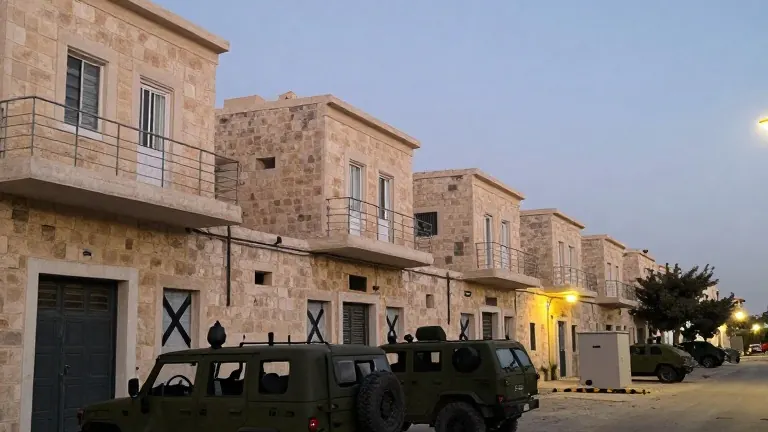
The military operation has resulted in a visible transformation of the urban landscape. Families that have been forcibly removed from their homes now find black Xs painted on their doorframes. In other locations, soldiers have occupied private residences, converting them into military outposts. One resident of Hebron described the initial order to leave, noting that soldiers told them to depart with the clothes on their backs and that they were to stay out until further notice.
The current wave of displacement builds on a long history of structural destruction in the region. From 2009 until the siege began on October 23, Israeli forces demolished 2,491 buildings and displaced 3,534 people in the Hebron governorate, according to the Office for the Coordination of Humanitarian Affairs, or OCHA. The rate of demolition has risen sharply in recent years. In Area C and occupied East Jerusalem, the monthly average of demolitions since 2024 is at least double the rate seen in the preceding 15 years.
Many of these demolitions are tied to administrative hurdles. Palestinians often struggle to obtain building permits issued by Israeli authorities, leaving structures built without those permits vulnerable to destruction. In Masafer Yatta, a cluster of 13 communities in the South Hebron Hills, authorities have demolished about 400 structures in 15 years, displacing 969 people. Nearly half of those structures were destroyed since January 2025.
Roland Friedrich, the West Bank director for UNRWA, stated that the scenes in Hebron carry alarming echoes of the mass displacement seen in the northern occupied West Bank in early 2025. During that period, military operations emptied the Jenin, Tulkarem, and Nur Shams refugee camps. More than 34,000 refugees from those camps remain displaced more than a year after the operation began. The agency reported that the operation destroyed more than half of the residential buildings in those camps.
OCHA records show that between 2009 and October 2026, 1,399 buildings were demolished in the Jenin and Tulkarem governorates, displacing 4,139 people. These figures primarily track demolitions for lack of permits or as punishment, rather than buildings destroyed during military raids. A separate investigation by the research group Forensic Architecture verified more than 200 incidents of deliberate destruction across four refugee camps. The group found that armoured bulldozers, controlled demolitions, and air attacks were used to widen roads through homes and gardens for military vehicles.
In February 2025, Israeli Finance Minister Bezalel Smotrich said the cities of Tulkarem and Jenin would come to resemble Jabalia and Shujayea, two of the most devastated areas in Gaza. The military activity has continued in the interim. Last week, Israeli forces detained four Palestinians in Tulkarem and converted several homes in the village of Burin into military barracks. Near Jenin, the army has ordered residents of an entire village to leave permanently, leaving farmers like Jabri Yahya unsure of where to take their livestock and belongings.
The scale of destruction extends beyond the West Bank. In Gaza, an estimated 201,290 structures had been damaged or destroyed by June 16, 2026, according to the UN Satellite Centre. This figure represents about 82 percent of all structures in the Strip. Many families now live in tents or damaged buildings without reliable water or sanitation. In southern Lebanon, a July 2026 assessment by the UN Development Programme identified 31,259 buildings damaged or destroyed, mainly south of the Litani River. The International Organization for Migration recorded the displacement of 333,144 people across Lebanon as of September 9.
Volker Turk, the UN human rights chief, warned that threats to empty and erase entire neighbourhoods in Hebron raise serious concerns of ethnic cleansing. He called for all displaced people to be allowed to return home. The physical removal of buildings and the conversion of homes into barracks mean that for many families, the question is no longer when they will go home, but whether there will be a home to return to.
Source: Al Jazeera