Huckabee argues archaeology proves 3,800-year Jewish presence in Israel
The U.S. ambassador to Israel tied biblical history to material evidence during an award ceremony at the National Campus for the Archaeology of Israel.
By Nicholas Campbell ·
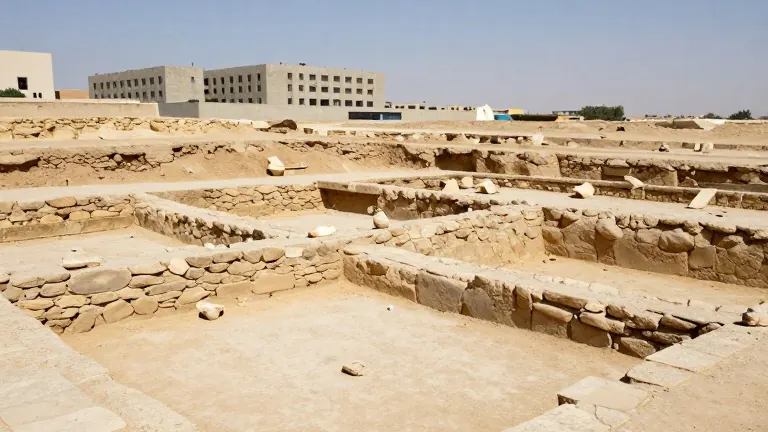
U.S. Ambassador to Israel Mike Huckabee used a speech in Jerusalem to link modern Zionism to biblical history and archaeological findings. He made these remarks on Tuesday, November 10, while receiving an honor at the annual Zionist Leadership Fund convention.
The event was held at the National Campus for the Archaeology of Israel. The organization stated that its goal for the gathering was to reintegrate the Zionist spirit into Israel's influencer spaces. Huckabee positioned the venue as a physical anchor for his argument, describing the campus as a location that validated his interpretation of Zionism's religious and historical foundations.
He characterized Zionism not as an abstract concept but as a reality grounded in scripture and the continuous presence of the Jewish people. Huckabee asserted that Jewish inhabitants have lived in the land without interruption for 3,800 years. He traced this timeline back to what he described as God's decree establishing the region as a homeland, labeling the connection an "unbroken promise made by God" that remains visible in daily life.
The ambassador turned to material evidence to support these claims. He argued that archaeological discoveries reinforce the historical accuracy of biblical narratives. Huckabee stated that the primary value of new excavations lies in their ability to confirm the truth of the scriptures. He pointed to the convention venue itself as proof that the material record aligns with the religious text.
He also emphasized the historical weight of the region he identified as Judea and Samaria. Huckabee described a road in that area as the route traveled by biblical patriarchs, prophets, and kings. He used this landscape to link the physical geography to the specific figures named in ancient accounts.
By framing these narratives as records of actual individuals, Huckabee sought to distinguish them from invented stories. He presented the biblical accounts as a historical ledger of named people who lived through specific events. His speech concluded with this view that the connection between the land and the people serves as a tangible reminder of that history.
The convention served as the backdrop for these remarks. Huckabee’s address connected the award ceremony to a wider narrative about the land's past. The event highlighted the intersection of diplomatic presence and historical interpretation in Jerusalem.
More Business · World news · Bad Service · Report a business · Got a Story?