Reeds, Feathers, and the Tools of Torah
Historical texts trace the shift from reed pens to quills and synthetic tips in the creation of sacred Jewish writings.
By Valentina Rojas ·
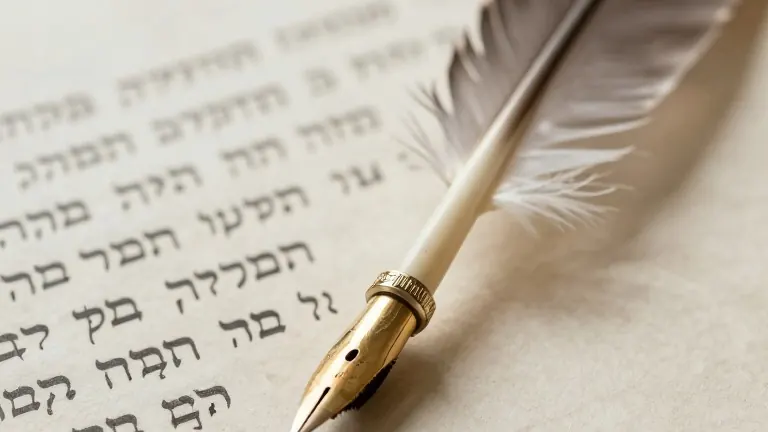
The tool used to write a Sefer Torah has changed over centuries, yet its role remains fixed.
Ancient Jewish teachings describe the reed as the ideal instrument for this work. The Gemara in Taanis 20b links the reed to humility and flexibility. It notes that the reed bent without breaking, a quality that allowed it to merit writing sacred texts like tefillin and mezuzos.
Early authorities preferred the reed. The Rema in Yoreh Deah 271:7 states that a Sefer Torah should be written with a reed rather than a feather. However, later generations of scribes moved away from this practice. The Aruch HaShulchan in Yoreh Deah 271 observes that scribes in his era rarely used reeds because they lacked the skill to do so effectively.
Instead, scribes turned to feather quills made from kosher birds. The Aruch HaShulchan describes these feathers as well suited for writing. A feather can be cut to a precise edge and reshaped as it wears down. For a skilled scribe, the quill acts as an extension of the hand, allowing for accurate and beautiful letters.
The choice of tool matters because the pen determines the physical form of the letter. If the instrument slips, cuts too deeply, or spreads ink poorly, it can affect the validity of the writing. The pen must allow the scribe to produce durable, halachically correct characters.
Later authorities also debated the use of metal pens. The Aruch HaShulchan raised concerns about iron. A sharp iron point can damage parchment, and iron is symbolically associated with instruments that shorten life. He compared this to the prohibition against using iron on the altar stones. Torah is considered a source of life, creating a symbolic contrast with metal tools.
Modern scribes now have access to synthetic and ceramic-style points that maintain a consistent edge. The material has evolved from reed to feather to modern composites. The central question remains whether the instrument allows the scribe to create writing worthy of its sacred purpose. The tool itself stays ordinary, but its function is to produce letters that carry holiness.
Source: The Jewish Press