Khalid bin Salman Leads 3-Nation Delegation to Tehran for Mecca Pact Talks
Saudi defense chief meets Iranian leaders to test the trilateral alliance signed in August, amid ongoing regional conflict.
By Nicholas Campbell ·
Tehran, October 26.
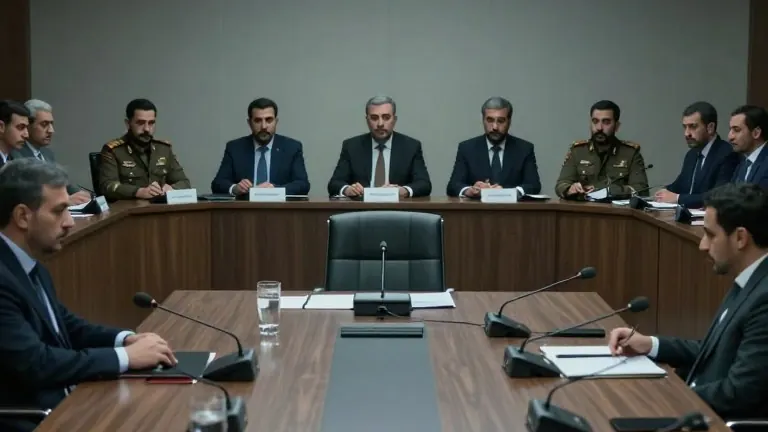
Saudi Defense Minister Khalid bin Salman stepped off his plane in Tehran on Monday, arriving alongside senior security officials from Turkey and Pakistan. The visit marks the first high-level diplomatic test of the Mecca Joint Defense Agreement, a trilateral security pact signed just two months ago.
The delegation includes Field Marshal Asim Munir, the chief of Pakistan’s army, and Ibrahim Kalin, the head of Turkish intelligence. Their presence in Iran signals an effort to coordinate a practical response to the ongoing war. The three nations are seeking to determine how the agreement functions beyond its written clauses. Skeptics have long questioned whether the pact has enough operational weight to deter conflict or if it remains a framework for political consensus.
Iran’s Foreign Ministry framed the meeting as a step toward regional stability. Spokesman Esmaeil Baghaei stated on Monday that hosting these military and security figures helps build lasting diplomacy. He argued that the Middle East can achieve security only through collective effort. This messaging aligns with Iran’s preference for regional solutions that limit direct American involvement in the war.
The diplomatic push occurs against the backdrop of a complex relationship between the United States and Israel. President Donald Trump has endorsed Prime Minister Benjamin Netanyahu’s leadership twice, suggesting the US sees Israel as a unique partner in fighting Iran. Many Israelis view the alliance as broader than a single leader, but reports indicate Jerusalem has ordered efforts to destabilize the Iranian regime. Israeli military leaders had previously hesitated to strike before domestic elections, a pause that the current delegation in Tehran may be seeking to extend.
Critics of the Mecca pact often compare it to NATO, but the structures differ. NATO was founded in 1949 and has focused on military training, shared operations, and cultural exchange rather than constant warfare. The Mecca agreement, signed on August 7, 2026, in Mecca by Crown Prince Mohammed bin Salman, Turkish President Recep Tayyip Erdogan, and Pakistani Prime Minister Shehbaz Sharif, includes a collective defense clause. It defines an armed attack on one member as an attack on all three. The treaty also mandates joint exercises, intelligence sharing, and defense technology development.
The alliance combines a nuclear-armed state, a NATO member, and a major regional monarchy. Turkey published the full text of the agreement in October as it moved toward parliamentary ratification. A Strategic Political and Defense Committee was established to coordinate these efforts. The participation of these specific powers suggests the pact is designed for pragmatic cooperation and consensus-building rather than immediate joint combat operations.
In Riyadh, Saudi Arabia’s Deputy Minister for Public Diplomacy, Dr. Rayed Krimly, confirmed the delegation’s purpose. He said the talks aim to ease regional tensions and encourage dialogue. The meetings are set to take place with Iranian President Masoud Pezeshkian and Mohsen Rezaei, the Secretary-General of the Supreme National Security Council. The outcome will reveal whether the Mecca pact serves as a stabilizing force or remains a diplomatic instrument for managing the current crisis.
Source: The Jerusalem Post