Local expert offers practical tips for sorting through paper clutter
Kacy Paide, a professional organizer with over 20 years of experience, advises residents to start with the pile nearest them and use simple labeling to stay on track.
By Nicholas Campbell ·
Residents of Clearwater looking to reduce the amount of paperwork in their homes can start with a simple approach: ignore the garage and focus on the desk. Kacy Paide, a professional organizer who has worked in the field for more than two decades, says the most urgent documents are usually the ones closest to where you sit.
Paide recommends separating documents into two distinct piles. The first pile is for active items, which require immediate follow-up such as paying a bill or making a phone call. The second pile is for inactive items, which include receipts, birth certificates, and sentimental papers like old greeting cards. Paide advises setting the inactive pile aside for later review rather than trying to file it immediately.
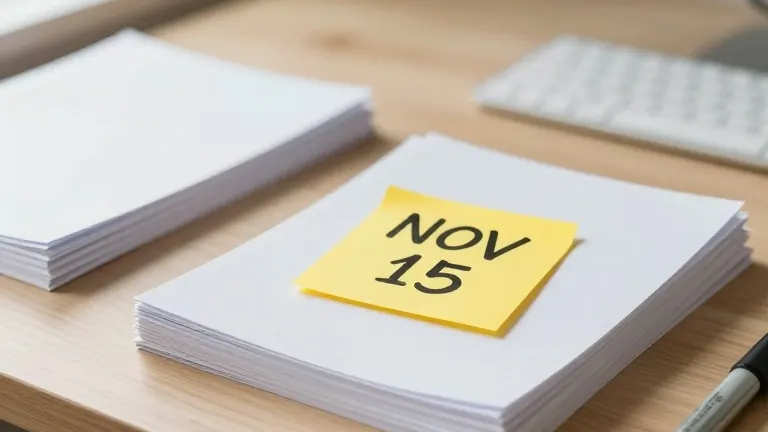
For active documents, clarity is key. Paide suggests writing the specific due date in bold marker on a sticky note and attaching it to the paper. She warns against vague labels like 'urgent' or 'due now.' Instead, writers should use precise dates, such as 'due by Nov. 15' or 'start no later than 12/1.' This method helps identify exactly what needs to be done and when, preventing the loss of meaning that comes with generic urgency.
When building a long-term filing system, Paide emphasizes that the method must be one the user will actually maintain. She does not require complex color-coding or alphabetization. Instead, she recommends using simple file folders and labeling them with permanent marker on sticky notes. This allows users to reuse the folders if they change their sorting preferences later. Paide also suggests storing these folders in visible boxes on bookshelves to create a visual system that is easy to access.
Important documents like passports and marriage certificates should be placed in brightly colored folders. Paide recommends positioning these folders at the very front or back of a file box. This placement, which she calls a 'bookend,' ensures that critical records are easy to spot without having to dig through other files.
Deciding what to keep and what to discard is often the hardest part. Paide suggests asking oneself under what circumstances a document would be needed. If the answer is unclear, it may be time to let go. For documents containing sensitive information, such as account numbers, Social Security numbers, or signatures, the Federal Trade Commission advises destroying them to protect against identity theft. While some people feel the need to shred every piece of paper with their name on it, Paide notes that shredding is only strictly necessary for those sensitive data points.
Sentimental or difficult papers, such as divorce documents or old letters, can be sorted with the help of a friend or family member. Paide encourages individuals to speak their thoughts aloud while sorting. She reports that people often reach conclusions about keeping or tossing these items quickly once they are heard. For those who feel overwhelmed, Paide suggests working in 25-minute intervals. Organizing is an ongoing process that requires regular maintenance, not a one-time event.
Paide’s approach focuses on control and simplicity. By starting with the nearest pile and using specific deadlines, residents can manage their documents without feeling rushed. The goal is to create a system that fits the individual's life, whether that involves elaborate labeling or basic folders. The process requires patience and the willingness to make decisions about what stays and what goes.
Source: WUSF Public Media · original report published
More News · Clearwater news · Report a business · Got a Story?