
Neither leader has the 61 seats needed to govern Israel
Netanyahu's bloc and Eisenkot's bloc both fall short after the election, leaving coalition talks to the president.
By Samuel Peterson ·
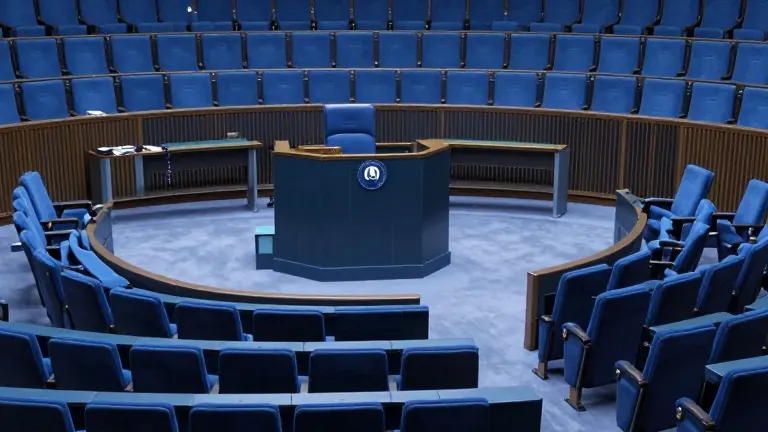
Neither Benjamin Netanyahu nor Gadi Eisenkot reached the 61 seats needed for a majority in Israel's 120-seat Knesset. Opposition parties hold more seats than Netanyahu's right-wing bloc, but Eisenkot's coalition falls short without support from predominantly Arab parties, which he has repeatedly ruled out. The president will consult party leaders in the coming days to determine who receives the first opportunity to build a government.
The president is not bound to choose the leader of the largest party. The candidate given that role has 28 days to secure 61 lawmakers, with an extension of up to 14 days available. If that effort fails, another candidate can be given a chance. Israeli and some U.S. media outlets have reported that President Trump favors a unity government bringing together Netanyahu and Eisenkot, though NPR has not independently confirmed those reports.
Eisenkot has said the Arab parties' positions on Hamas and the war in Gaza prevent him from governing with them. Some have refused to endorse the military goal of eliminating Hamas or to condemn it as a terrorist organization. Arab parties represent 21% of the population, who generally refer to themselves as Palestinian citizens of Israel. Eisenkot's bloc and the Arab parties together would command more than 67 seats, but such a coalition remains unlikely given the campaign promises made by Eisenkot and several of his potential partners.
Netanyahu's traditional coalition partners do not have enough seats to return him to power. He would need roughly eight lawmakers from outside his bloc; Eisenkot would need about 13 defectors if he continues to exclude Arab parties. A unity government would also require resolving who serves as prime minister and whether the position rotates. Eisenkot has pledged not to serve in a government led by Netanyahu.
Eisenkot's bloc is considering an effort to replace the speaker of the Knesset and hopes to pass legislation establishing a state commission of inquiry into the political and security failures that preceded the Hamas-led attack on Israel on Oct. 7, 2023. In his election night speech, Netanyahu said Israel still had to complete its mission against Iran. Eisenkot warned Netanyahu not to use "Israel's security for your political needs."
Danny Citrinowicz, an Israeli analyst on Iran, said Netanyahu has a political incentive to renew fighting while coalition negotiations are underway. "Netanyahu definitely has an incentive to go to war," Citrinowicz said. "He understands that returning to war against Iran while a government is being formed would serve his interests."
Eisenkot joined Netanyahu's emergency government and war Cabinet after the Oct. 7 attack, then resigned eight months later, saying Netanyahu was making decisions based on political considerations rather than Israel's national interests.
Source: NPR