New Book Claims Quran Confirms Torah, Citing 54 Parallels
Rick Sopher and Abdulla Galadari argue the texts share core ethical messages, a view that gained traction after the October 7 attacks.
By Samuel Peterson ·
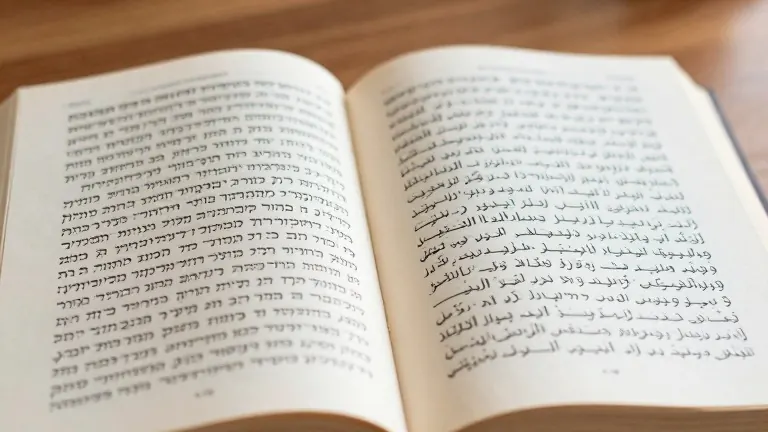
Rick Sopher, a British interfaith activist and senior adviser at Edmond de Rothschild Capital Holdings, asserts that the Quran was designed to confirm the Torah rather than oppose it. In a new book titled “Illuminating Scriptural Connections,” published by the Jewish Publication Society, Sopher and his co-author, Emirati scholar Abdulla Galadari, map 54 weekly Torah portions against Quranic verses to demonstrate shared concepts.
The project emerged from a decade of study but gained urgency following the Hamas attack on Israel on October 7, 2023. Sopher, whose family originated in Baghdad, sought to answer whether the Quran makes Jewish-Muslim cohabitation impossible. He noted that his family lived peacefully among Arabs and Muslims for roughly 2,500 years until the last relative left Iraq in 1971.
Sopher argues that while the Quran contains verses critical of some Jews, it also includes passages of reverence. He stated that wars between the peoples cannot be attributed to scriptural differences. The authors contend that the Quran, which emerged approximately 2,000 years after the Torah, designates the Torah as a source of guidance and light.
The book explains that differences in narrative arise because the Quran does not present biblical stories in chronological order. It selects portions useful for its ethical messages, often omitting historical context, dates, and names. For example, the Quran portrays prophets as infallible, suppressing narratives of sin found in the Torah, such as Noah’s drunkenness or Joseph’s tattling on his brothers.
Sopher also addresses passages perceived as hostile. He explains that references to Jews as apes and pigs target those who break the Sabbath, a violation punishable by death in the Torah. He claims the Quran’s calls to violence are less severe than the Torah’s instructions to wipe out the Amalekites or Canaanite nations. He further notes that the word jihad refers to an inner struggle rather than a holy war against non-Muslims.
One of the book’s central findings concerns the story of Abraham’s nearly sacrificed son. The Quran does not name the son, referring to him only as my son. Sopher cites scholar Reuven Firestone, who found that in the seven centuries before 1350 CE, 131 Muslim traditions identified the son as Isaac, while 133 identified him as Ishmael. Later scholars, including 14th-century figures Ibn Taymiyyah and Ibn Kathir, shifted the consensus toward Ishmael, moving the story’s location from Jerusalem to Mecca.
Sopher acknowledges that many Jews and Muslims have little interest in studying the other’s scriptures. However, he believes a substantial audience is willing to explore shared religious traditions. The book aims to counter the idea that the Quran is a war manual by showing its deep references to biblical characters and ethical monotheism.