The Greatest: How One Show Reframes the 1964 Title Fight
Prime Video’s new series opens with Sonny Liston’s 1964 victory over Cassius Clay, using that moment to explore the roots of the boxer’s identity before he became Muhammad Ali.
By Valentina Rojas ·
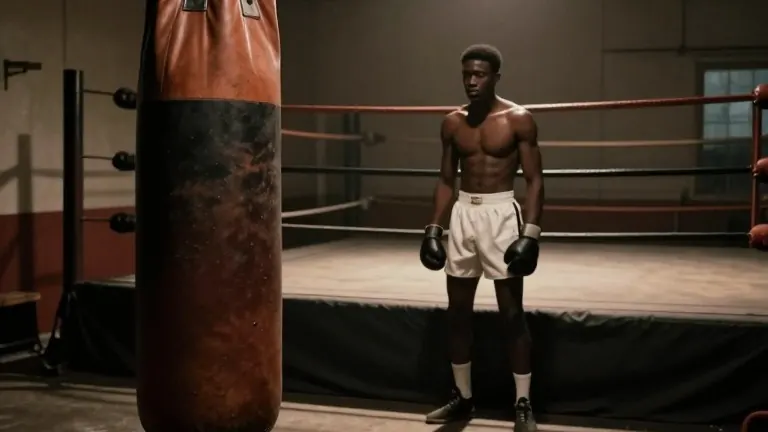
The 1964 heavyweight championship bout between Cassius Clay and Sonny Liston serves as the narrative endpoint for Prime Video’s new series, The Greatest. While previous adaptations, including the 2001 film Ali and the 2020 movie One Night in Miami, began their stories with that specific fight or its immediate aftermath, this new production concludes its initial arc there. This structural choice positions the 1964 title win not as a starting point, but as the culmination of a journey that began in the 1960 Rome Olympics.
The series streams in full on Nov. 4. It spans the period from 1960 to 1964, focusing on Clay’s transformation from a teenager in Louisville, Kentucky, to a world champion. The narrative covers his return from Italy to his segregated hometown, his relationship with his family, and his professional debut. Creator Ben Watkins, known for the series Cross, steers the project away from pure hagiography despite the presence of executive producers Lonnie Ali and Michael B. Jordan. The show attempts to explain the internal mechanisms that allowed Clay to achieve greatness rather than simply recounting his victories.
Jaalen Best, a relative newcomer to the screen, portrays the young boxer. His performance emphasizes the youth and self-possession of the character. The series details his domestic life, including his bond with his mother Odessa, played by Dana Gourrier, and his father Cash, played by Omari Hardwick. Cash is depicted as a man who abandoned his artistic dreams to paint signs and cope with alcohol. The dynamic with his younger brother Rudy, played by Kai Parham, provides a familial counterweight to the external pressures of the boxing world.
The production explores the psychological forces behind Clay’s confidence. It identifies three primary drivers: his innate will, the unconditional support of his family, and his adoption of the showmanship of professional wrestler Gorgeous George, portrayed by Chris Jericho. These elements allow Clay to maintain his poise against skeptics and the biases of the era. The series contrasts Clay’s self-assurance with that of his opponent, Sonny Liston, played by Amin Joseph. Liston is depicted as an ex-con and abuse survivor who has internalized societal stereotypes, creating a sharp narrative dichotomy between the two men.
The show navigates the boxer’s spiritual evolution through his interactions with Malcolm X, played by Michael Ealy, and Elijah Muhammad, played by Hill Harper. It distinguishes between the mentorship of Malcolm X and the political tactics of Elijah Muhammad. This distinction informs Clay’s decision to join the Nation of Islam, a choice that creates tension with his Christian upbringing and his mother. The series uses these relationships to illustrate how Clay defined his values and identity during this formative period.
The next phase of the series will likely extend beyond the 1964 title fight, as the current structure treats that event as a chapter ending. The production aims to provide a comprehensive look at the years leading up to that moment, ensuring that the audience understands the foundation of the legend before witnessing its most famous display.
Source: Time