Federal forecasters call for wetter winter across Florida
NOAA's seasonal outlook places northern Florida among the regions with the highest chance of above-normal precipitation this winter, alongside southern Georgia and South Carolina.
By Valentina Rojas ·
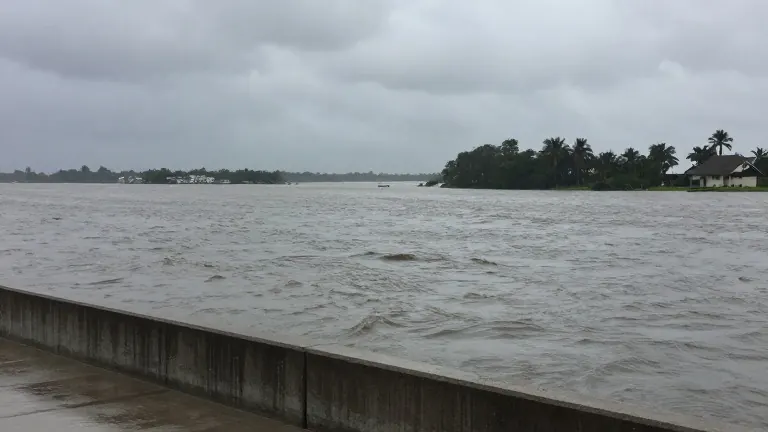
Residents across Florida should prepare for a warmer, wetter winter, according to the seasonal outlook released by the National Oceanic and Atmospheric Administration. The forecast points to above-average precipitation across much of the southern United States, with northern Florida, southern Georgia and southern South Carolina carrying the highest probability of above-normal precipitation in the continental U.S. Florida also faces a higher tornado risk during El Niño years. During the intense El Niño of 1998, Central Florida saw one of the deadliest tornado outbreaks, killing 42 people, according to WUSF reporting at the time.
The winter outlook follows an unusually quiet Atlantic hurricane season that produced a single named hurricane, Isaias, which affected the Florida panhandle.
El Niño forms in the tropical Pacific, where a vast area of water near the equator warms every few years and releases large amounts of heat into the atmosphere. That heat shifts weather patterns worldwide. Josh Willis, a climate scientist at NASA's Jet Propulsion Laboratory, described this year's event as "like a monster that stretches all the way across the ocean." NOAA's latest forecast estimates warmer-than-average temperatures across much of the continental U.S. with above-average precipitation in several regions. The agency also notes El Niño years are associated with coastal flooding along the Eastern seaboard and the West Coast.
"It's a strong, if not historic El Niño going into this winter," Ken Graham, director of NOAA's National Weather Service, said at an October media briefing. "Earlier and better decisions saves life," he added.
The pattern's effects have already reached U.S. shores. In early October, a Kelvin wave, a large band of warm water, moved north along the West Coast and raised sea levels, increasing flood risk. Dillon Amaya, an assistant professor of atmospheric sciences at North Carolina State University, said such waves do not cause flooding on their own but "load the dice" by raising the likelihood of it. A wave was positioned between Los Angeles and San Francisco in late October, and several more are expected through fall and early winter. Severe flooding in late October in the Four Corners region forced rooftop rescues and evacuations after two months of unusually wet weather. Daniel Swain, a climate scientist with the University of California Agriculture and Natural Resources, said El Niño is partly to blame and that record-warm offshore waters, driven by El Niño and a marine heat wave, fueled the storms. He said the heat wave can largely be attributed to human-caused climate change.
Forecasts for the Northeast call for warmer temperatures and above-average precipitation. Studies cited in NOAA materials suggest El Niño can strengthen and increase the frequency of nor'easters by pushing warm, moist air north, and those storms combined with high tides can drive coastal erosion. Forecaster Jon Gottschalck of NOAA said the greatest chance for above-average precipitation is predicted for the southern U.S.
Seasonal predictions do not guarantee outcomes. Forecasts indicate El Niño can shift the odds toward certain conditions without assuring they occur. Graham said, "El Niño can favor a more mild than average winter in the northern United States, but listen, in the winter months it doesn't mean you won't have snow. It doesn't erase the risk." He said seasonal predictions are key to helping prepare and give a heads up to assess risks and how to mitigate them.
NOAA's next scheduled winter outlook update is expected as the agency continues to monitor ocean conditions through fall and early winter, with several more Kelvin waves forecast along the California coast during that period.
Source: WUSF Public Media · original report published
More News · Clearwater news · Report a business · Got a Story?