Japan to Build AMRAAM Factory in Push to Outpace Regional Threats
Defense chiefs in Cebu announced a joint production facility for F-35 missiles while detailing new Chinese naval movements near Kyushu.
By Samuel Peterson ·
Three Chinese destroyers and a coast guard ship crossed the Osumi Strait this week, marking the first time Japanese officials have recorded that specific fleet configuration moving from the East China Sea to the Pacific Ocean. Japanese Defense Minister Shinjiro Koizumi disclosed the incident Thursday in Cebu, Philippines, where he is attending an annual gathering of Southeast Asian defense leaders.
Koizumi cited the naval passage as an example of the challenging security environment in the region. His ministry reported the vessels moved south of Kyushu, Japan’s southernmost main island. The defense chief stated that Japanese forces will continue to monitor such activity closely as Tokyo accelerates military buildup in its southwestern regions.
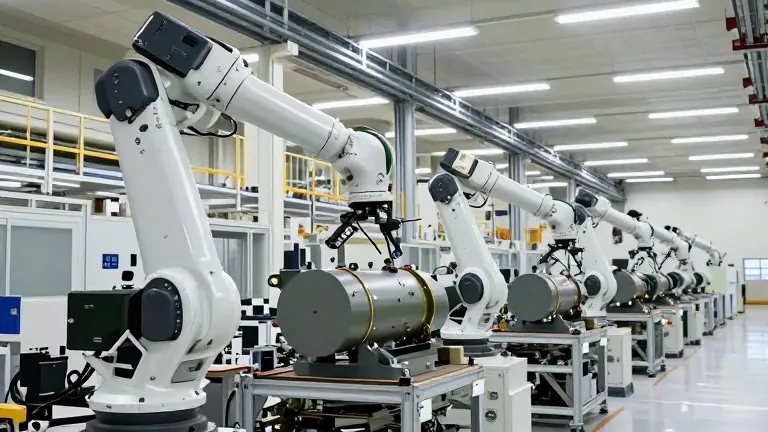
The announcement comes alongside a new agreement between the United States and Japan to establish a domestic facility for joint missile production. The two nations plan to construct a final assembly and inspection plant in Japan for the Advanced Medium-Range Air-to-Air Missile, or AMRAAM. Koizumi identified the weapon as essential for the operation of F-35 fighter jets, which are used by both the U.S. and Japanese militaries.
Koizumi described the collaborative effort as Operation Supercharge. He told reporters Wednesday night that he shared a sense of crisis with U.S. Defense Secretary Pete Hegseth regarding the regional situation. The two leaders agreed to strengthen deterrence and response capabilities with greater speed and intensity than previous efforts.
Hegseth addressed a separate session of ASEAN defense ministers on Wednesday. The group was led by Philippine Defense Secretary Gilberto Teodoro Jr., the host nation’s representative. Hegseth described the U.S. approach as strong, quiet, and clear. He explained that the strategy aims to deter coercion without engaging in public theatrics that could lead to needless escalation.
The U.S. secretary said the message must be clear to friends and potential adversaries that Washington will defend its interests and those of its allies. He reaffirmed the importance of a free and open international order based on the rule of law. This framework rejects attempts to alter the status quo through force or coercion.
Australian Defense Minister Richard Marles also spoke in Cebu, noting that Australian forces and allies will continue to assert the rules-based order in the Pacific. He referenced an incident last year in which a Chinese J-16 fighter released flares and flew within 30 meters of an Australian P-8 Poseidon surveillance jet over disputed waters in the South China Sea. Marles stated that such events do not deter Australia from maintaining freedom of navigation on the high seas.
The meeting serves to strengthen defense cooperation among major Asian and Western powers. While the U.S. and China have traded criticisms on the sidelines, the focus remains on avoiding major regional conflict. Washington has maintained that it is obligated to defend the Philippines if Filipino forces come under armed attack in the South China Sea. Beijing and Tokyo also maintain a separate dispute over tiny Japanese-controlled islands in the East China Sea, with both sides frequently accusing the other of maritime infringement.
Source: WEPR