Netanyahu's Coalition Lacks Seats for Government After Election
With 85% of ballots counted, neither Netanyahu nor challenger Gadi Eisenkot has a clear path to a majority, increasing the likelihood of a fourth election in four years.
By Valentina Rojas ·
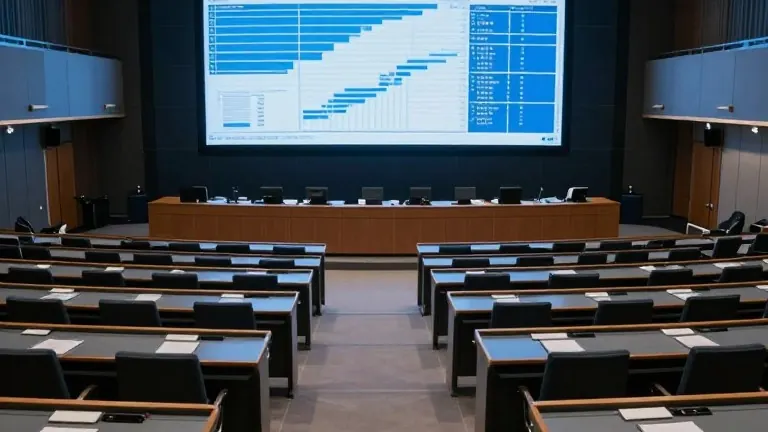
Voters in Israel face continued political instability as neither the incumbent Prime Minister Benjamin Netanyahu nor his main rival Gadi Eisenkot secured a majority of seats in Tuesday's election. With 85% of votes counted, both coalitions remain short of the 61 parliamentary seats required to form a government. This gridlock suggests that new elections are the most probable outcome, extending a period of frequent voting that began in 2019.
Netanyahu leads the Likud party and currently sits in a coalition with far-right and ultra-Orthodox groups. Eisenkot, who positions himself as the primary alternative to Netanyahu, leads the Yashar Party. Eisenkot addressed his campaign headquarters on election night, urging Netanyahu to announce his retirement from political life. He described the current administration as a culture of lies and division, though his call for unity came after exit polls were revised to show Netanyahu overtaking Eisenkot in the projections.
A national unity government remains a theoretical option but faces steep political hurdles. Eisenkot would need to abandon his campaign promise to oust Netanyahu, while Netanyahu would likely have to drop his current ultra-Orthodox allies to make room for Eisenkot's party. At Likud headquarters, Netanyahu thanked his loyal partners and called for a strong right-wing government, signaling an intent to preserve his existing alliances. A renewed conflict with Iran could pressure both sides to cooperate, as Netanyahu had pushed for fresh strikes on the country with US approval in the days before the vote.
An alternative path involves Eisenkot forming a coalition with Arab parties, a move that would mark a major shift in Israeli politics. The United Arab List is projected to win around seven seats, while The Joint List is expected to secure 12 seats. Both groups have indicated they would support an opposition government from outside if necessary. However, most Jewish parties in Eisenkot's bloc have ruled out formal participation with Arab groups, with Yair Golan of The Democrats standing as the primary advocate for this arrangement.
Netanyahu could also attempt to poach right-wing members from Eisenkot's bloc. Naftali Bennett of the Beyachad alliance and Avigdor Lieberman of Yisrael Beiteinu are the most likely candidates for such a switch. Both leaders campaigned on extending military conscription to the ultra-Orthodox, a stance that conflicts with the two ultra-Orthodox parties currently in Netanyahu's government. Electoral math suggests that replacing those parties with Bennett and Lieberman may not yield enough seats for a majority.
If negotiations fail, Israel will return to the polls. Netanyahu would remain as caretaker Prime Minister until the next vote, a position that may benefit him politically. Analysts note that the high turnout among Arab citizens, who comprise about one-fifth of the population, may not be replicated. Additionally, an estimated 70,000 Israelis who traveled home from abroad to vote are thought to lean against Netanyahu and may not return for a second round. Between 2019 and 2022, the country held five separate elections as parties struggled to form stable coalitions.
Source: BBC News