NPR Analysis Shows 70 House Districts Face Heavy Ad Spending in Final Week
Democratic Party officials and ad buyers are targeting 70 competitive House races with six-figure investments as the November 3 midterm election approaches.
By Samuel Peterson ·
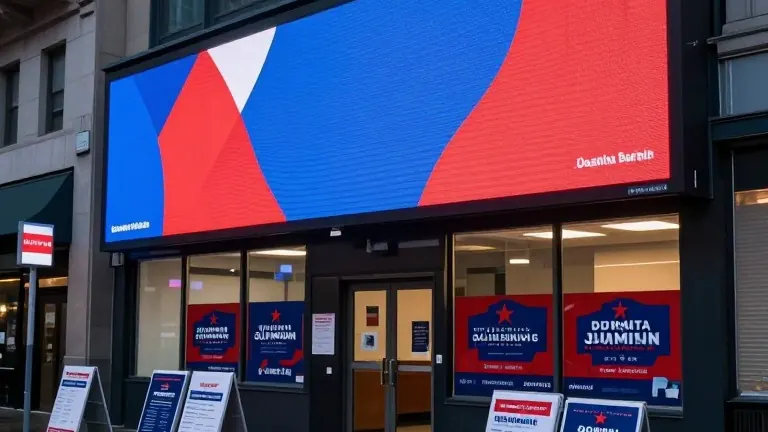
Seventy House districts will receive at least six figures in advertising from both parties during the final week of the 2026 midterm campaign, according to an analysis by NPR. The data indicates that the primary strategic focus for national party operatives has shifted from preventing a Democratic majority to determining the size of that potential gain.
The competitive field includes specific high-cost targets in four states. Michigan, North Carolina, New York, and Florida each contain toss-up districts where advertisers plan to spend more than $10 million. The most expensive races are Michigan’s 7th District and North Carolina’s 1st District, both of which have more than $12 million in planned spending. Other major markets include Florida’s 14th, 22nd, and 25th Districts, New York’s 17th District, and Iowa’s 2nd and 3rd Districts.
Current polling data suggests a favorable environment for Democrats. A recent NPR, PBS News, and Marist poll found that Democrats hold a 10-point lead among registered voters and an 8-point lead among likely voters on the generic congressional ballot. The Cook Political Report rates Democrats as favored in 220 seats. They list 17 races as toss-ups and 30 others as potentially competitive but leaning Republican. This stands in contrast to the current Republican margin in the House, which is 218 seats to 214.
Redistricting efforts have altered the map in key areas. Republicans redrew boundaries in several states to consolidate conservative voters, affecting districts held by Democrats Marcy Kaptur in Ohio, Don Davis in North Carolina, Shomari Figures in Alabama, and Darren Soto in Florida. Only the races involving Figures and Soto are currently rated as favoring Republicans. Democrats performed similar redistricting in California, affecting seats held by Republicans James Gallagher, David Valadao, Ken Calvert, and Darrell Issa, as well as independent Kevin Kiley.
The average of the 70 districts with heavy spending from both parties voted for Donald Trump by 9 points in the 2024 election. Sixty of these districts are identified as priorities by both the Democratic Congressional Campaign Committee and the Republican House campaign arm. Voter concerns center on the cost of living, including rising gas prices, tariffs, and the ongoing war in Iran. A record number of congressional retirement announcements has also increased the number of open seats.
Source: MPR News