Palestinian UN Mission Drafts Resolutions to Condemn E1 Settlement Plans
Draft texts seek UN recognition of non-recognition of Israel's West Bank presence and specific protections for Palestinian property, though EU consensus remains elusive.
By Samuel Peterson ·
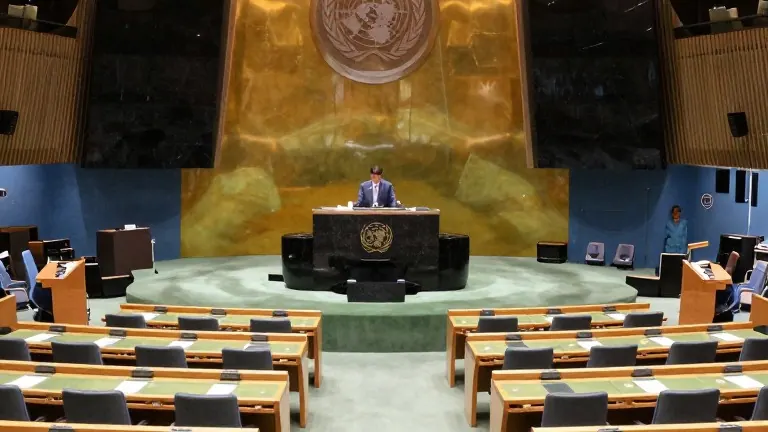
The Palestinian delegation to the United Nations is negotiating draft resolutions with European member states to address settlement expansion in the West Bank. These documents aim to secure international commitments regarding Palestinian property rights and income sources while formally criticizing Israeli construction plans in the E1 area.
The proposed texts include a demand that the UN declare it does not recognize Israel's presence in the West Bank. They also call for a policy of differentiation between the West Bank and the rest of Israel. According to Ynet, the drafts are currently under negotiation between the Palestinian delegation and European Union states.
European consensus has not yet materialized. The 27 EU member states failed to agree on supporting the resolutions after a week of internal consultations. Despite this lack of broad European backing, the Palestinian delegation is expected to consider bringing the drafts to a vote at the UN.
Israel's Ambassador to the UN, Danny Danon, characterized the effort as a diplomatic initiative to challenge Israel. "They are trying to exploit the situation to challenge us from the UN podium," Danon said. He added that the Israeli delegation is cooperating with allies to confront what he called a diplomatic attack. Reports indicate the Israeli mission is working to soften the language of the proposed resolutions and reduce the number of supporting nations.
The diplomatic push coincides with increased international attention on settlement activity and settler violence in the West Bank. In October, the United Nations Office for the Coordination of Humanitarian Affairs, known as OCHA, recorded at least 160 attacks on Palestinians by extremist Israeli settlers during the first two weeks of the olive harvest. OCHA noted that the Israel Defense Forces and Israeli border police protected settlers and occasionally participated in attacks on Palestinians and their property.
A separate report from a UN Commission of Inquiry on Israel documented a rise in Palestinian deaths in the West Bank. The commission found that nearly 500 Palestinians have been killed annually since 2022. This represents the highest number recorded since the UN began collecting such data in 2005.
In a September briefing to the UN Security Council, Ramiz Alakbarov, the UN's acting Middle East peace envoy, condemned the E1 settlement plan. He stated that the plan would "effectively sever the connection between the northern and southern West Bank and further isolate east Jerusalem from the rest of the West Bank." The UN has also documented the humanitarian consequences of the war in Gaza, recording 1,431 Palestinians killed in ongoing Israeli strikes following the 2025 ceasefire agreement.
Danon has frequently criticized what Israeli officials describe as anti-Israel bias within the UN system. In a recent interview with The Jerusalem Post, he described the organization as a platform to incite against Israel. He argued that UN officials actively promote a one-sided narrative of the war.
Danon maintains that Israel must remain engaged with the organization rather than withdraw. "My approach is that we have to be in the room, and we don't just leave," he told the Post. He emphasized that Israel's presence is necessary to counter accusations and present its case to other member states. The Israeli mission is encouraging Israelis to apply for professional and managerial positions within the UN. Danon stated that the Israeli voice needs to be heard not only from the podium but also in the corridors and meeting rooms where decisions are made.