Arab-led blocs win 19 seats as Israel faces government deadlock
A record 64% surge in voting for Arab parties has left both Netanyahu and Eisenkot short of the 61 seats required to rule, forcing a high-stakes negotiation for the next government.
By Valentina Rojas ·
Arab-led political parties captured 19 of the 120 seats in the Israeli Knesset following a vote that saw a 64% increase in turnout for these blocs compared to the previous election. This surge denied both Prime Minister Benjamin Netanyahu’s far-right coalition and challenger Gadi Eisenkot’s center-right opposition the 61 seats necessary to form a government. The result places Arab-led parties in a decisive position as they navigate the talks that will determine who governs Israel next.
The path to this political impasse began with a shift in voter behavior among Palestinian citizens of Israel. For years, many shunned the ballot box, feeling their participation changed little in a state they viewed as marginalizing their communities. Last month, however, record numbers of voters turned out, altering the balance of power in the Knesset.
Jamal Zahalka, chairman of the High Follow-Up Committee, the main body representing Palestinian citizens of Israel, described the outcome as a historical achievement. "We blocked the government of Netanyahu from continuing," Zahalka said. He added that the community found its strength in the voting process.
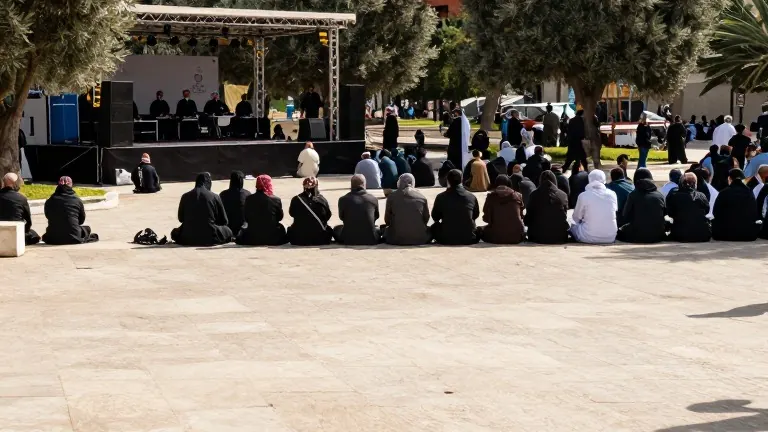
The election results have intensified long-standing debates about the role of Palestinian Arabs in Israeli society. In the town of Kufr Qasim, residents gathered two days after the election to commemorate the 1956 massacre of local residents by border police during the Suez Crisis. Speakers addressed a crowd of hundreds, noting that 70 years later the story is not over.
Residents of Kufr Qasim linked their high turnout to worsening rights and discrimination since the October 7, 2023 attacks. Intisar Sarsur, 65, said there is no freedom anymore and that her community seeks basic human rights. She noted that almost everyone she knows voted, with not one person staying home.
Netanyahu and his allies reacted to the large Arab turnout by framing it as an emergency. On election day, Netanyahu posted a video calling the situation urgent, while Itamar Ben Gvir, the national security minister, filmed an appeal outside Kufr Qasim urging voters to ensure the country remains Jewish and Zionist.
Likud, Netanyahu's party, claimed the election was stolen through bribery, threats, and forgery. The party warned of a foreign takeover and the Islamization of Israel but has not made evidence public. Police reported finding no basis for these claims, and election officials stated there was no widespread fraud. The head of the elections committee asked the Shin Bet security service to investigate suspected foreign funding of efforts to boost Arab turnout.
The messaging from Netanyahu’s bloc is widely seen as an attempt to prevent Eisenkot from partnering with Arab parties. Such an alliance would give Eisenkot the majority needed to form a government but risks fracturing his own center-right coalition due to sharp anti-Arab sentiment following the October 7 attacks, in which approximately 1,200 people were killed.
Eisenkot, a former military chief of staff whose son died in Gaza, is viewed as a hawkish figure. He formulated the Dahiyeh doctrine in 2008, which advocated using disproportionate force against villages from which militants fire. Arab parties are divided on how to proceed. The Joint List alliance, which won 11 of the 19 Arab-led seats, has said it will not formally join Eisenkot’s government due to the ongoing war in Gaza but could support it from the outside.
President Isaac Herzog is currently consulting with parties to determine who receives the mandate to form a coalition. He is expected to announce the chosen candidate next week. That candidate has 28 days to form a government, with the option for a two-week extension. If that fails, a second candidate gets 28 days without extension. If no coalition is formed, Israel will face repeat elections next year.