Tides reach 2.54 feet, closing Fort Lauderdale bridge
Saltwater flooded downtown streets and submerged the Las Olas Bridge during the year's highest predicted tide.
By Valentina Rojas ·
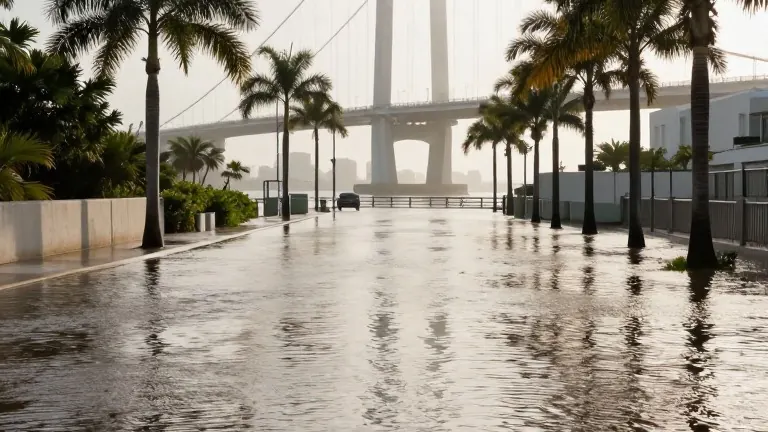
The Las Olas Bridge in Fort Lauderdale closed to traffic on Tuesday morning after saltwater from the ocean spilled over the seawalls and into the streets of downtown. The flooding was not caused by rain or a storm system. It resulted from seasonal king tides that reached levels comparable to those recorded during past hurricanes.
The Virginia Key tidal gauge, which has kept records since 1994, registered a preliminary peak of 2.54 feet above mean higher high water between 10 and 11 a.m. This measurement ranks as the third highest peak value in the station's history. It trails only the readings from Hurricane Wilma in 2005, which hit 2.55 feet, and Hurricane Irma in 2017, which reached 3.63 feet.
Persistent onshore winds intensified the event. Meteorologist Leslie Hudson of Florida Storms noted that the combination of wind and rising seas pushed water into areas that had never been reached before. The conditions overwhelmed local infrastructure, forcing the closure of the bridge and submerging parts of the downtown district during the annual boat show.
City officials had warned residents to prepare for these conditions. The City of Fort Lauderdale posted an advisory on October 26, predicting that Tuesday, October 27, would bring the year's highest tide. The forecast listed approximate high tide times for Tuesday at 9:45 a.m. and 9:45 p.m., with additional high tides scheduled for Wednesday morning and evening.
Longtime residents described the scene as resembling hurricane flooding. The extent of the water on the streets stunned many who have lived in the area for decades. The event exposed limitations in South Florida's aging drainage systems, which can allow seawater to flow backward into streets when tidal levels become exceptionally high.
Scientists observing the data noted that while king tides are a natural astronomical occurrence, rising sea levels are making such coastal flooding events more frequent. The Tuesday surge stands as a clear marker of how higher baseline water levels interact with normal tidal cycles to stress coastal infrastructure.
Source: WQCS (Treasure Coast public radio)
More News · Fort Lauderdale news · Report a business · Got a Story?