Clearwater voters weigh state control and national economy
Pinellas County residents choose their governor and representatives while deciding the balance of power in Washington for the final two years of the current administration.
By Valentina Rojas ·
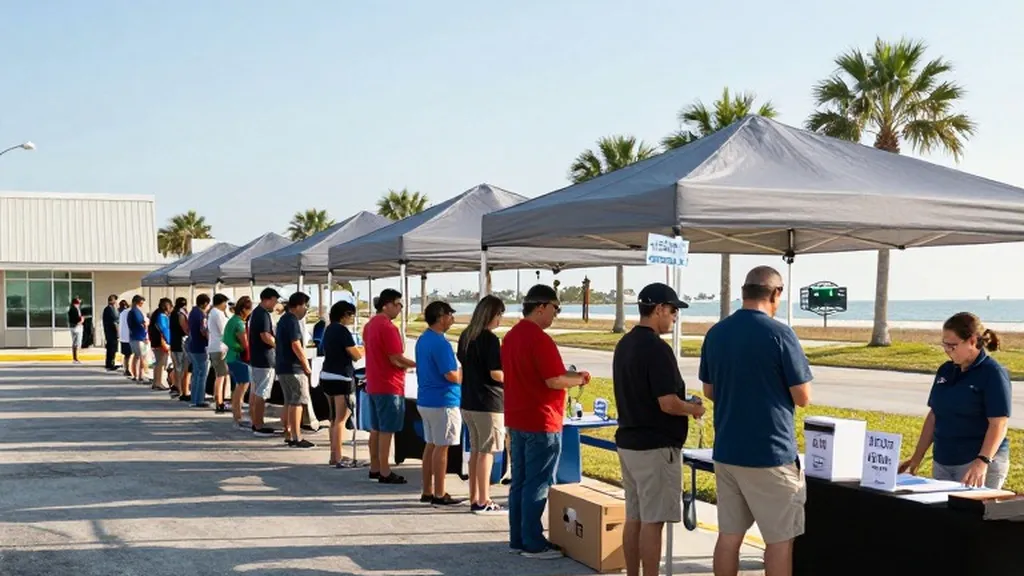
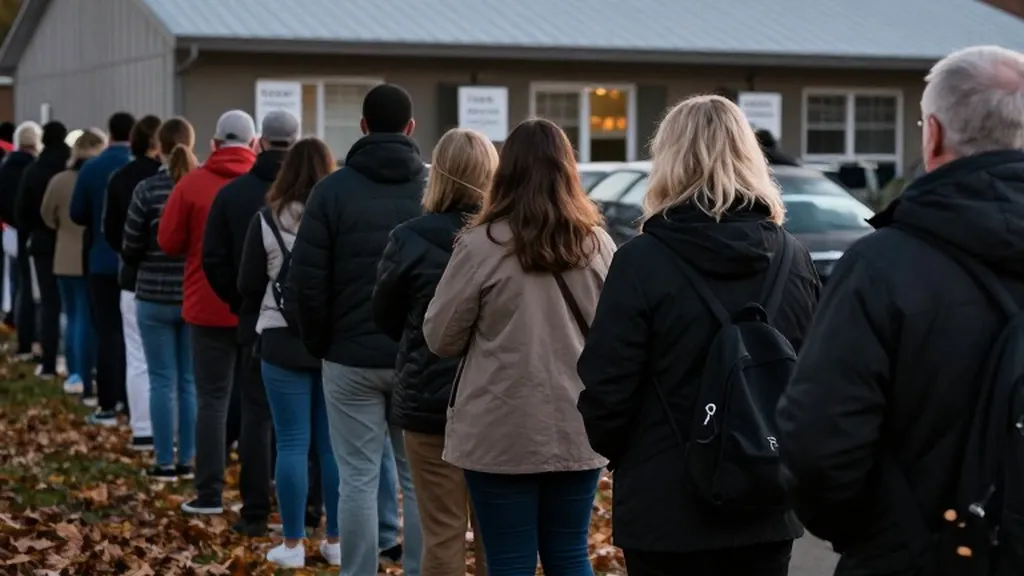
Polls across Clearwater, Largo, and Pinellas Park opened at 7 a.m. today under the bright November sun, marking the start of a pivotal election day for Florida. Residents in these three communities are heading to the polls to select their next governor, a position that has been open since the last term, and to vote in every U.S. House seat in the state. The Florida Department of State, as noted by Ballotpedia, confirms that the governor’s race is a key contest with no incumbent on the ballot. Voters are also weighing state and local offices, including state senate and house seats, as well as specific ballot measures that could reshape the state’s financial and tax landscape. The polls will remain open until 7 p.m. in the Eastern and Central time zones, ensuring that anyone in line at the close of business is entitled to cast a vote.
For Clearwater residents, the decision on who governs Florida carries significant weight for the state’s infrastructure and economic direction. The governor’s office is a central battleground, with candidates from the Democratic, Libertarian, No Party Affiliation, and Republican parties competing for the seat. According to Ballotpedia, this is an open seat, meaning the winner will set the tone for state policy without the advantage of a sitting incumbent. This race is part of a broader national trend where 36 governorships are up for grabs, and Republicans currently hold 26 of these offices while Democrats hold 24. In Florida, the outcome will determine which party controls the executive branch of the state government for the next four years, a factor that often influences how federal funds are allocated to local projects in the Gulf Coast region.
Beyond the statehouse, Pinellas County voters are deciding the composition of the U.S. House of Representatives. All 435 seats are on the national ballot, and in Florida, every congressional district is up for election. Ballotpedia notes that Republicans hold 218 seats and Democrats hold 214, with one independent and some vacancies. Democrats need a net gain of three districts to take control of the House, a threshold that makes every vote in competitive districts crucial. The new congressional maps in Florida, resulting from mid-decade redistricting, may alter the traditional voting patterns in areas like Clearwater and Largo. These new boundaries are being scrutinized by both parties, as the AP reports that redistricting efforts aimed at securing Republican gains may not yield the same results as anticipated.
The national mood is heavily influenced by economic concerns, a theme that resonates deeply with Florida’s housing and tourism-dependent economy. The Associated Press describes this election as a referendum on the current president’s second term, with many voters expressing frustration over high prices. AP-NORC polling indicates that only 25% of U.S. adults approve of the president’s handling of the economy, while about seven in ten believe the country is heading in the wrong direction. In Clearwater, where cost of living is a frequent topic of local conversation, these national sentiments are mirrored in the local discourse. Voters are not just choosing representatives but also signaling their approval or disapproval of the economic policies that have shaped the last two years of the current administration.
The fight for control of the Senate adds another layer of complexity to the day’s proceedings. While Florida does not have a regular U.S. Senate election this year, it does have a special election for the remainder of a term previously held by a different official. Ballotpedia identifies 35 Senate seats in play, including 33 regular elections and two special ones. Republicans hold 53 seats, and Democrats need a net gain of four to secure a majority. The outcome of these races will determine the level of oversight Congress can exert on the executive branch. If Democrats gain control of either chamber, the AP notes that investigations and possible impeachment proceedings become more likely, which could impact how federal agencies operate and interact with state and local governments in Florida.
The economic stakes extend beyond politics to the financial markets, as Reuters reports that Wall Street is watching the results closely. Investor concerns about AI spending and debt ceiling negotiations could be intensified by the outcome of this election. For Clearwater, a stable federal government is essential for maintaining the flow of tourism and construction projects that drive the local economy. The AP notes that the election is likely to be the most expensive in history, with Republican committees outspending their Democratic counterparts at the committee level, although Democrats have outraised their opponents at the candidate level. This financial warfare highlights the intensity of the competition for each seat in Florida’s new congressional districts.
Voter turnout has been a critical factor in recent elections, and early voting numbers this year have surpassed those of four years ago in many states. More than 57 million people had already voted before today, according to the AP, suggesting a high level of engagement among the electorate. In Clearwater, local officials have prepared for a busy day, with the U.S. Postal Service adding staff to ensure mail ballots are counted on time. The AP quotes Republican National Committee Chairman Joe Gruters, who emphasized that turnout is the decisive factor in this election. This sentiment is echoed by Democrats, who are cautiously optimistic about the potential for change. The high turnout reflects a populace that is deeply invested in the direction of the country and the state.